What Causes Concrete Blockages in Underground Pipework?
The Hard Truth: What Causes Concrete Blockages in Underground Pipework?
Concrete and cement are the most formidable enemies of a functional drainage system. Unlike soft clogs made of grease or hair, a concrete blockage effectively turns your plumbing into a solid geological formation. Understanding how this happens—and when to call for reinforcements—is essential for any property owner.
Common Causes of Concrete Intrusion
Most concrete blockages are the result of "wash-down" errors during construction or renovation.
- Renovation Slurry: When tools, buckets, or mixers are cleaned over floor drains or outdoor gullies, the heavy particles settle in the "U-bend" or low spots of the pipe.
- Self-Levelling Compounds: These modern liquids are designed to flow perfectly flat, which makes them incredibly dangerous for pipes. They can travel deep into a sewer line before hardening into a glass-smooth, impenetrable barrier.
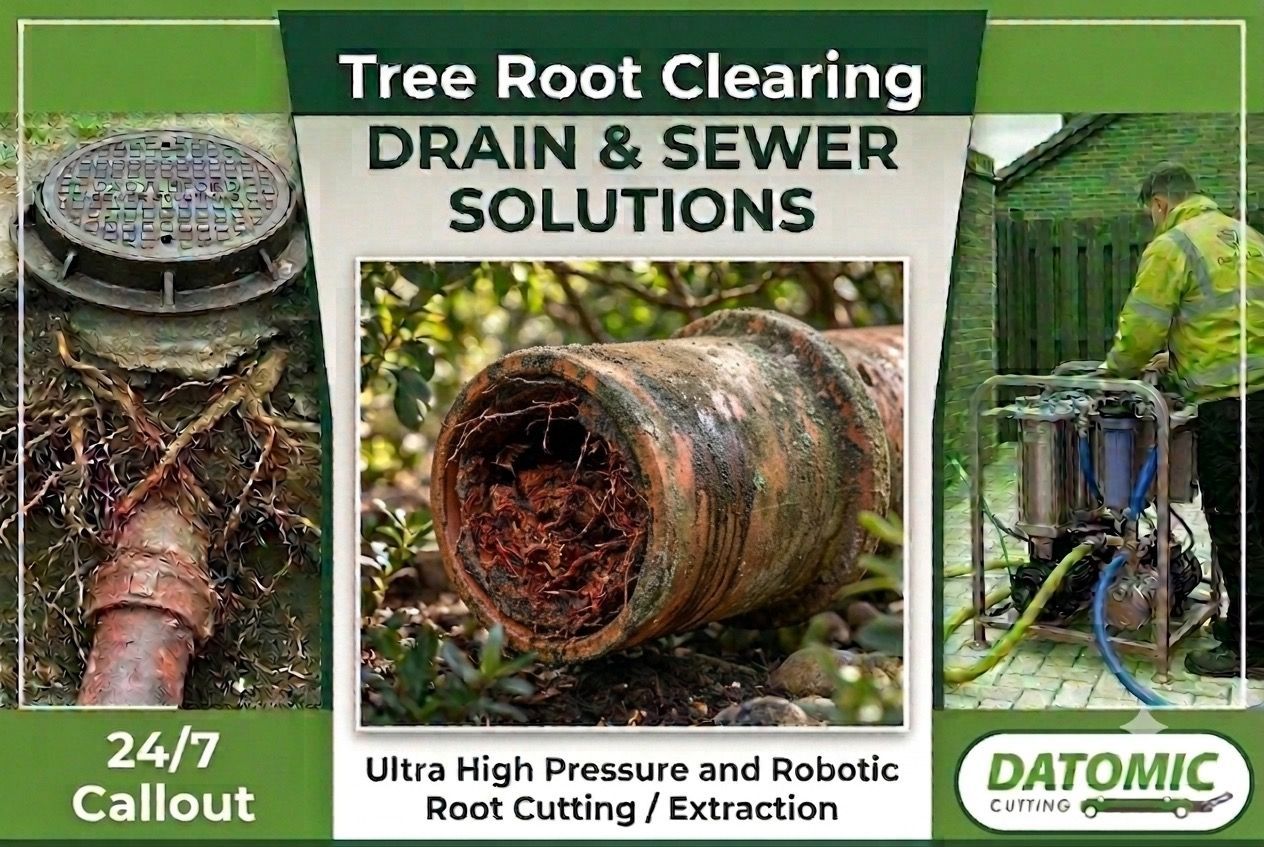
- Structural Defects: In older pipework, cracks or displaced joints can allow wet concrete from nearby fence post installations or foundation work to seep directly into the drainage string from the outside.
When is Professional Intervention Required?
While a homeowner might clear a minor silt clog with a plunger, hardened concrete requires industrial-grade force. Professional intervention is mandatory in the following scenarios:
- Zero Flow: If a drain is completely backed up and won't budge with a standard snake, the concrete has likely "cured" across the full diameter of the pipe.
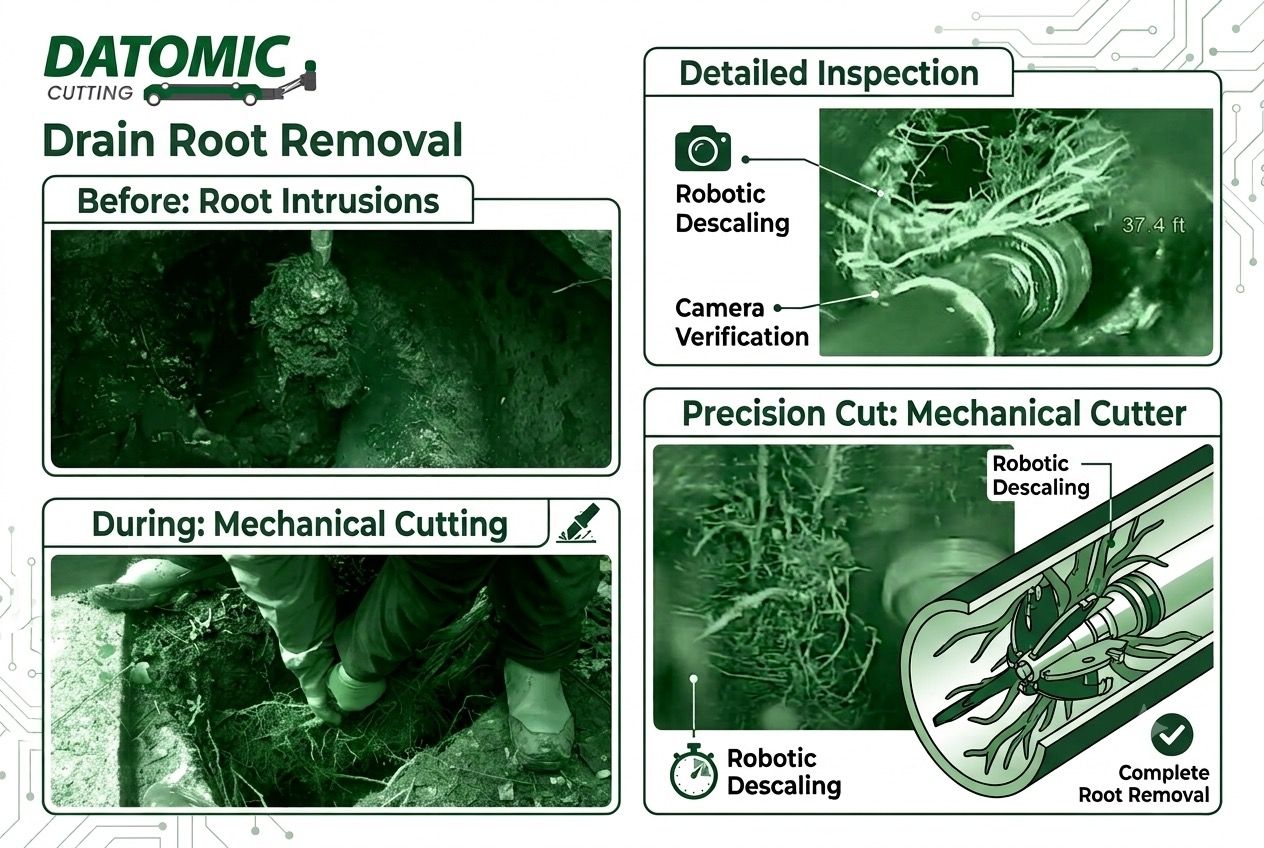
- Suspected Structural Damage: Concrete is heavy and expands slightly as it cures; this can split PVC pipes or shatter clay ones. Professionals use CCTV drain surveys to assess if the pipe is still salvageable.
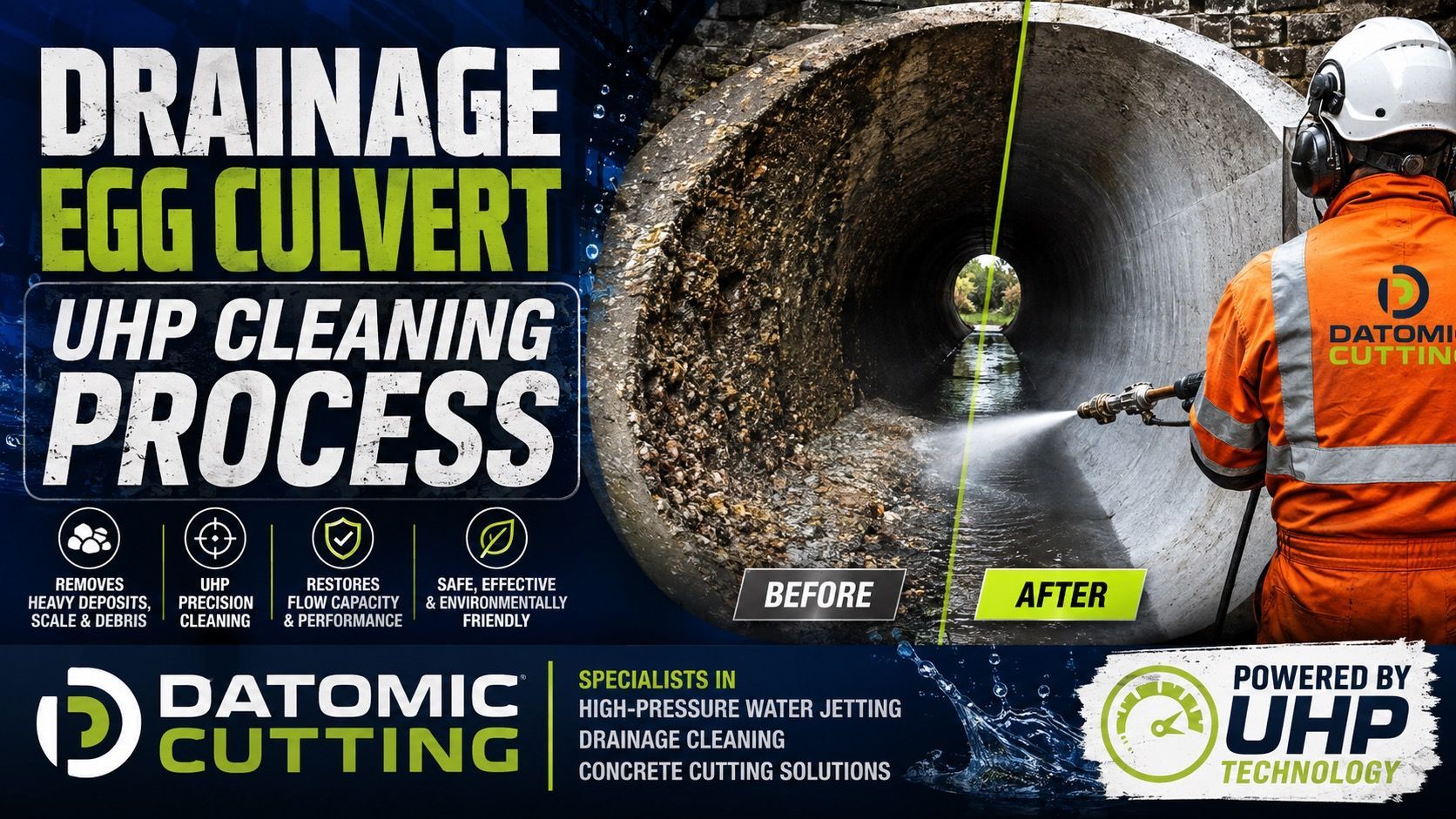
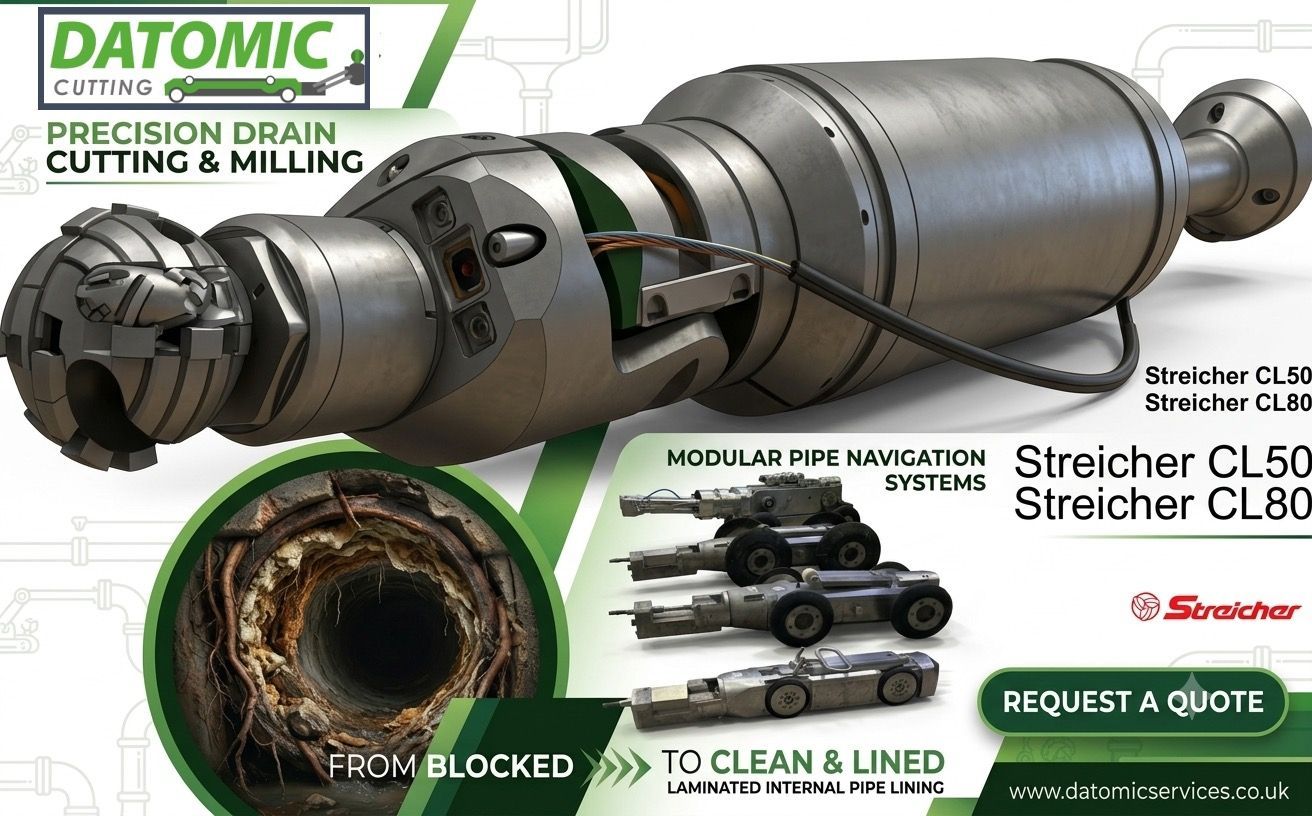
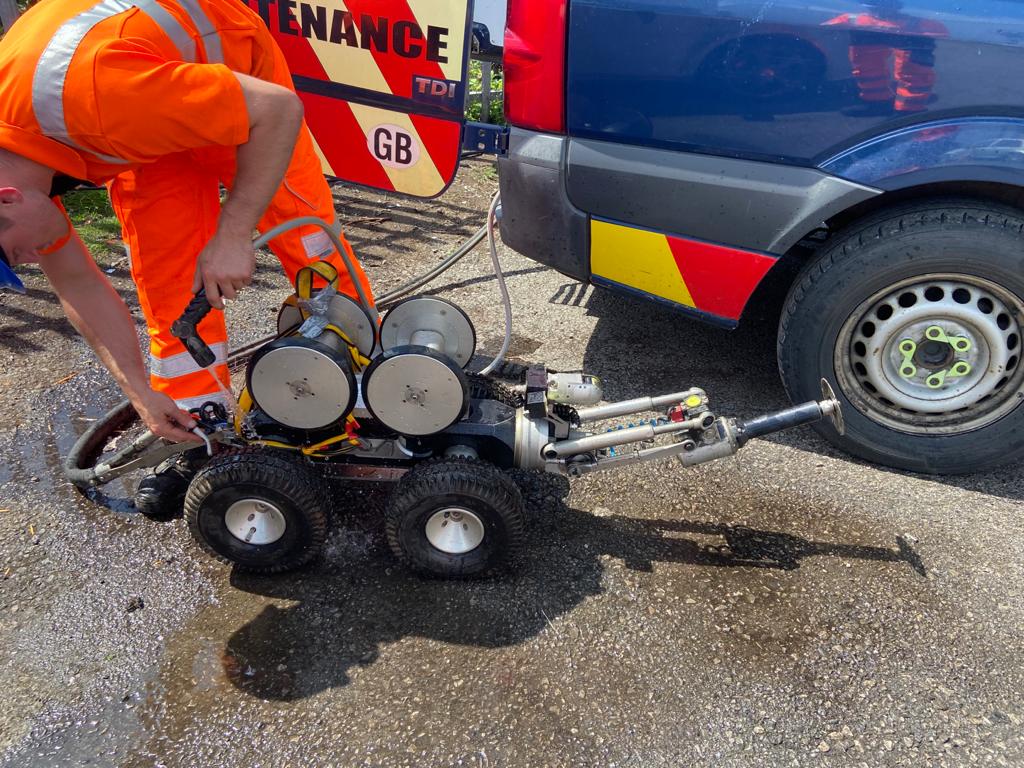
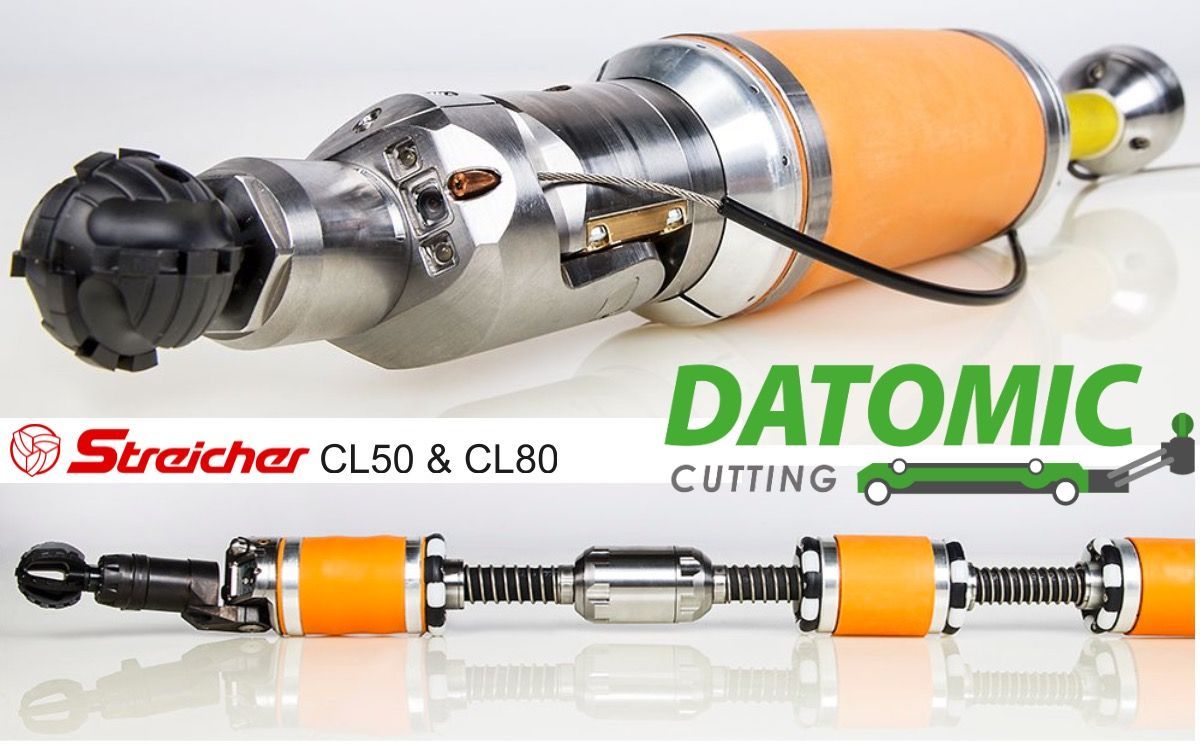
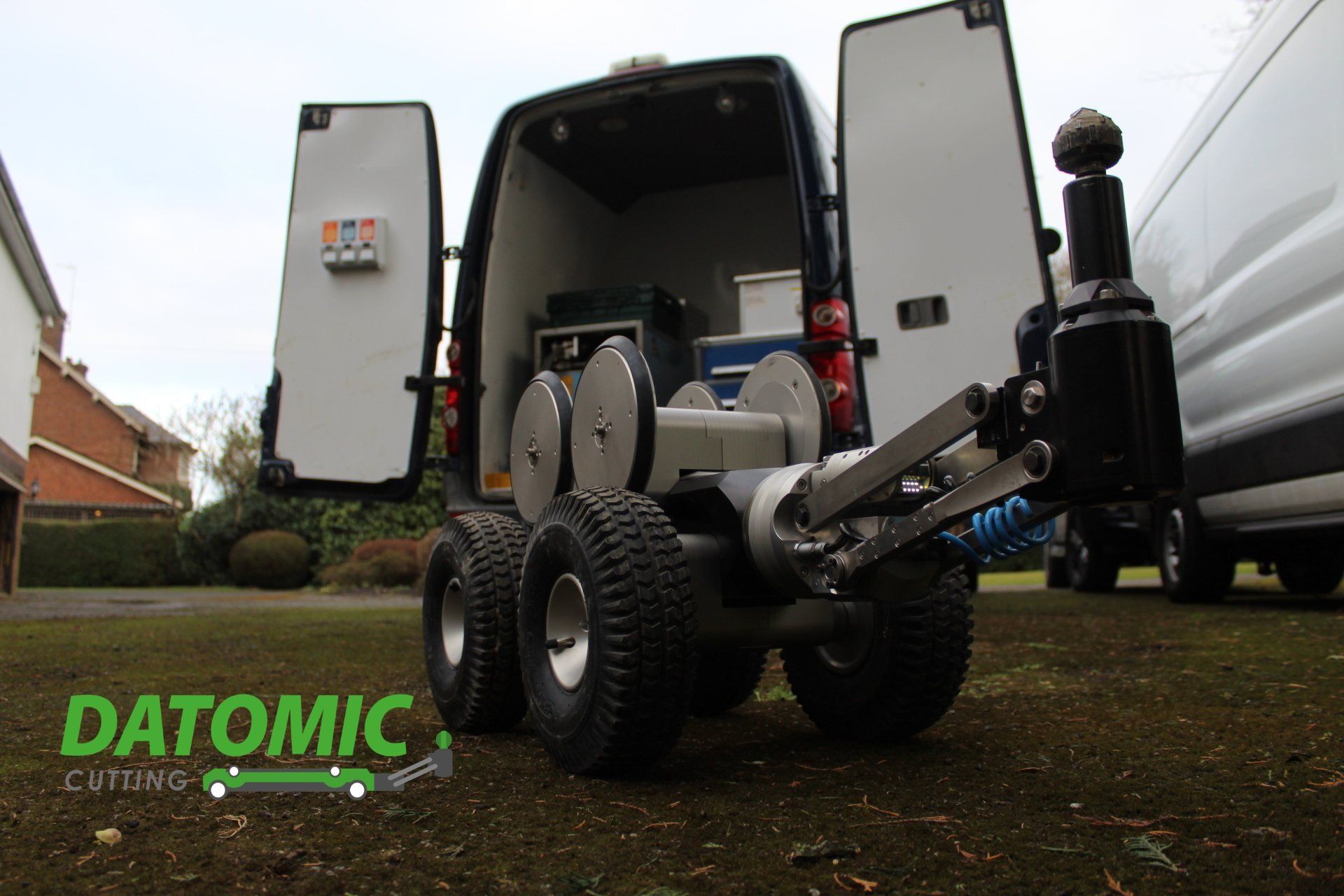
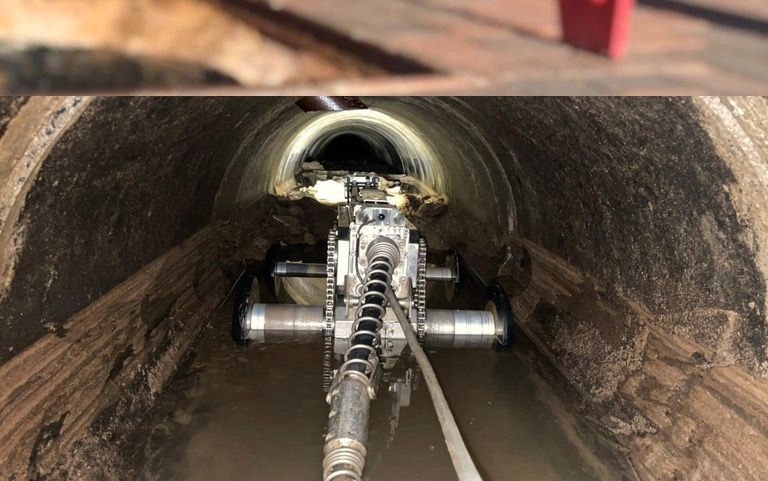
- Deep System Blockages: If the cement has reached the main sewer line, specialised robotic cutters or ultra-high-pressure water jets are needed to grind the material away without destroying the surrounding infrastructure.
Ultimately, concrete removal is a race against time. The moment you suspect cement has entered your system, consulting a commercial drainage expert is the only way to avoid a full-scale excavation.
Do you need a solution for blocked concrete? Trust Datomic Services to Clear the Way
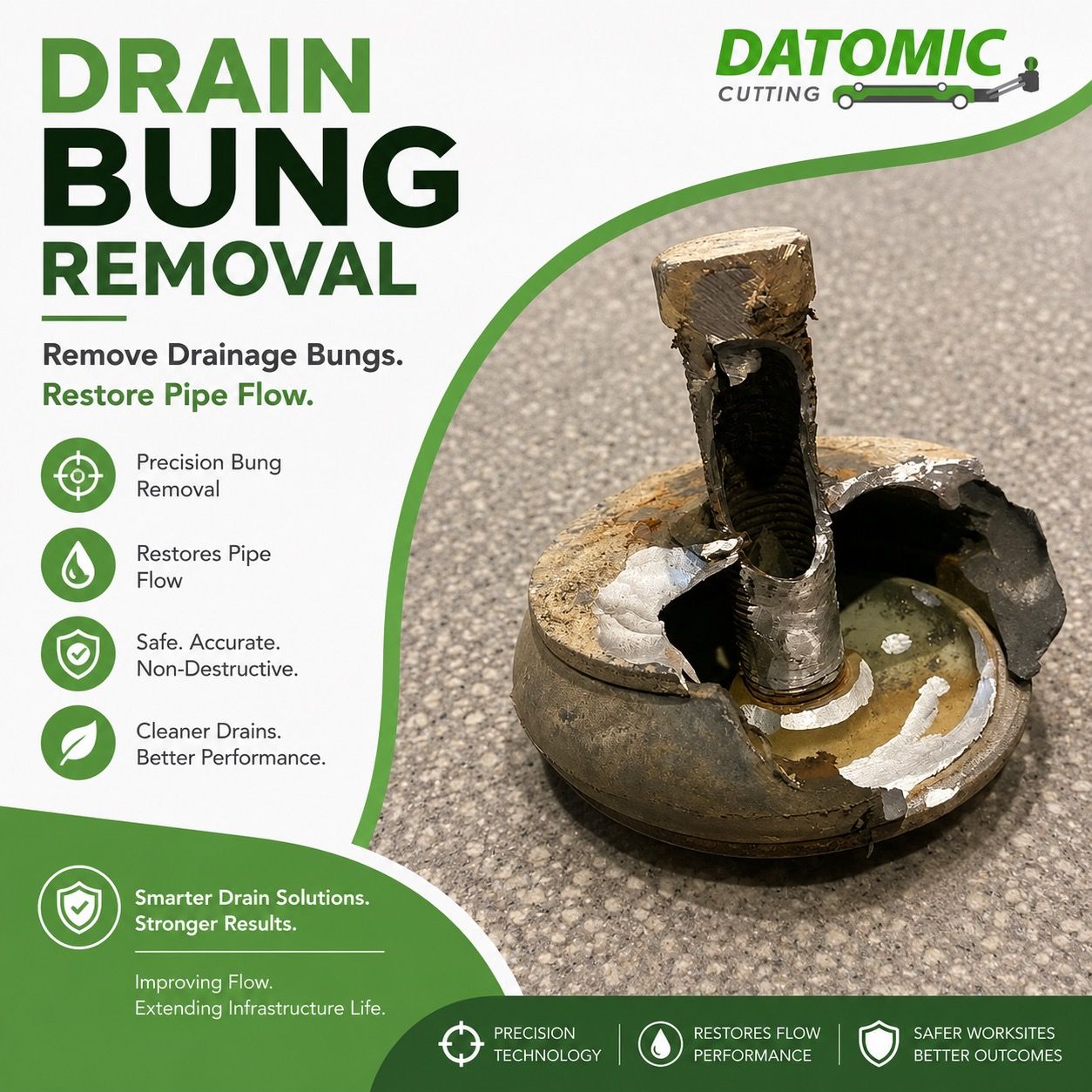
When concrete, grout, or slurry solidifies inside your underground drainage network, heavy excavation isn't your only option. At Datomic Services, we specialise in precision, non-destructive concrete removal from drains and underground pipework—saving you time, heavy disruption, and unnecessary expense.
With years of industry experience, our specialist technicians leverage advanced robotic cutting technology and high-pressure water jetting to eliminate the toughest obstructions and restore full pipeline capacity safely. As a fully insured, nationwide team, we bring trusted expertise to commercial, industrial, and civil infrastructure projects right across the UK.
Whether you are dealing with an urgent post-construction blockage or complex underground site maintenance, Datomic Services delivers reliable, high-spec solutions engineered for the most demanding drainage challenges.
Don't let set concrete compromise your pipework.
🌐 Visit www.datomicservices.co.uk today to learn more or request a specialist site survey.